More Servant Shenanigans Than A Game of Maid
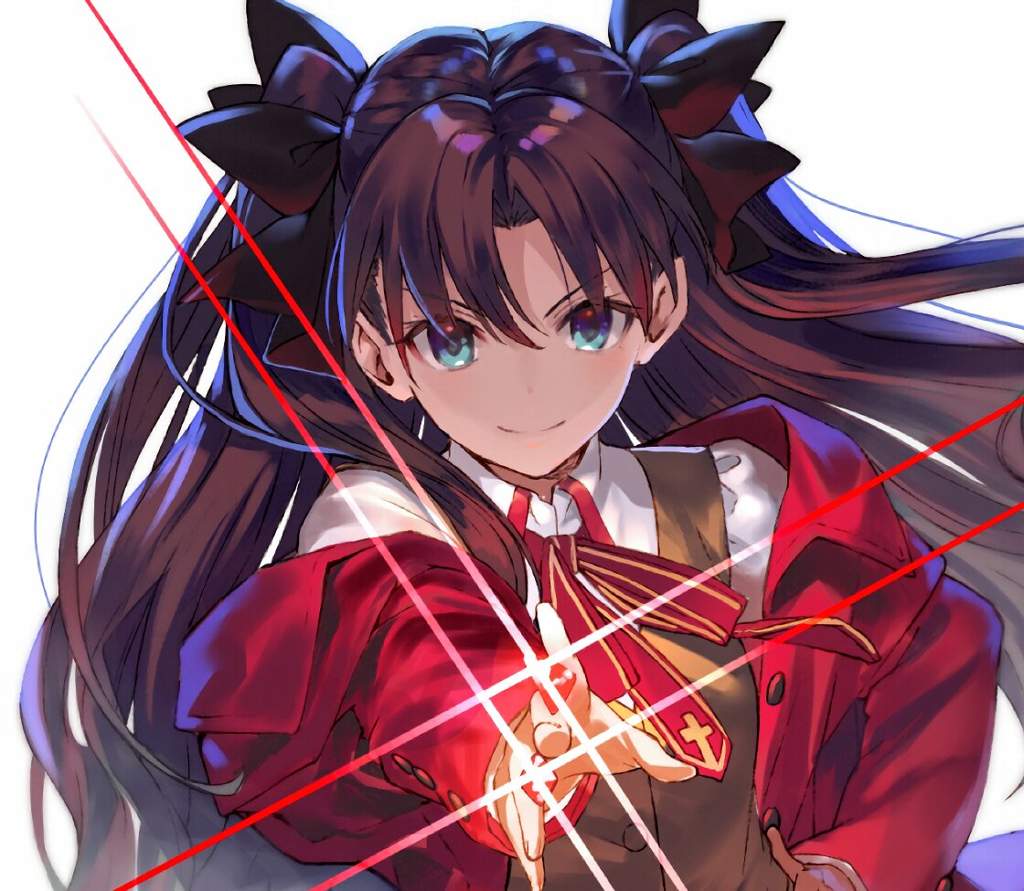

Fate Stay Night Rpg De Mesa

Fate Core is your answer. Wargame red dragon ash and shadows mod. Fate Core is a tabletop roleplaying game about proactive, capable people who lead dramatic lives. The type of drama they experience is up to you. But wherever they go, you can expect a fun storytelling experience full of twistsof fate. 2014 Gold Ennie Award Winner for Best Game and Best Rules.
Fate Stay Night Rpg
Also, next week I should be able to wrap up the player character sheets for most of the remaining Tsukihime and Fate Stay Night characters and the introductory lecture for Tsukihime. I have a pdf preview of some of the Fate Stay Night NPCs available in the Nasuverse RPG section. The Nameless Chronicles is the second videogame set in the world of Gaia, from the Anima: Beyond Fantasy RPG table-top books. You will enjoy a deep and multifaceted story where your choices and actions directly impact the journey and decide the fate of the protagonist. Hello all, I'm looking for an RPG system to represent a setting based upon the Type-Moon visual novel Fate/Stay Night. Wwe raw game download exe. Essentially, like most of Nasu's creations, it's a modern day world filled with mystical creatures (Magi, Vampires, Regenerators etc.) hidden among the populace. The Fate Nasuverse RPG Fate (Nasuverse) RPG by Claude J Smith III is licensed under a Creative Commons Attribution-Noncommercial-No Derivative Works 3.0 United States License. This is a homebrew project of mine. It is a standalone full product, and is designed to allow you to run the Nasuverse as a standalone game.
Original SA post Magical Burst, having come later than Maid, took the d66 mechanic from Maid, by all accounts (Read: One guy said it here, I accepted it as the most likely option). I think the guy doing Magical Burst was one of the translators for Maid. So while the mechanic itself may not be entirely Japanese in origin, it is at least co-opted for being in proximity to other Japanese things, and thus awesome by the Law of Contagion.
d66 also shows up like, once in Fate, too. Which makes for a nice segue, actually.
So, the last bit on Fate was a bit truncated because the cognitive dissonance of being told what to roll without having first been told how to roll it got to me. The book apparently assumes a reader is familiar with Unisystem, which I'm not.
Fate Part 5: More Servant Shenanigans Than A Game of Maid
In the interest of protecting anyone who may not have, and desires to later, play Tsukihime and/or Fate/Stay Night (They are legitimately entertaining visual novels, even if the sex scenes have induced a Pavlovian reaction of laughing uncontrollably in me), I'll skip the plot synopses and only touch lightly on the character stats. Rest assured, the plot synopses are great untapped veins of purestrain with inclusions of . So, let's move to Servants.
Before we go much further, it should be noted that 'Servant', 'Master', and the names of each Servant's class are gratuitous English in the games, much like how an English-speaking translator will use nakama, baka, keikaku, various honorifics, or Naminé-sempai is so gaijin she komo dachi tomo teriyaki sukimura sakura the Rearu Fork Brues.. Iie, iie, no way Jose . Seibaa, Laidaa, Baasaakaa, et cetera.
Servants, as mentioned before, are the spirits of legendary heroes summoned into a class-based RPG structure and intended to battle like Pokemon. They also operate a bit like Final Fantasy summons, consuming their Master's magical energy in order to battle, use their strongest attacks, and even exist. Servants may be drawn from any mythology and any time. All that matters is that their exploits elevated them to the status of hero in the people's minds. Villainous spirits are also summonable, but this is due to shenanigans. There have been two separate stories involving the Holy Grail War: Fate/Stay Night, and a prequel, Fate/Zero. There is also Fate/hollow ataraxia; a sequel involving a time loop and Avenger, Fate/Tiger Colosseum and Fate/unlimited codes; a pair of fighting games, Fate/EXTRA; a Persona-like RPG, and Fate/Apocrypha, which was a cancelled multiplayer game with a lot of interesting servants . I'll be covering only Stay Night and Zero here.
The sections on Servants are scattered around the book, with the actual points available at the very end of the last section on page 169. Previously I would just go straight through and handle things as they came, but this section will be improved by my skipping around.
So How Many Points Do I Get To Make My Servant? (p. 169)
Short answer: It depends on how good a magus the Master is. The process of creating a Servant involves a summoning ritual, which must be completed before you know how many points you can spend on a Servant. This may apply only to NPC Servants and Masters, because the other option is making half the players wait until the other half has mostly made their magi before they can start building.
Actually summoning a Servant requires some artifact relating to their life or heroism, or a similar mindset to the hero itself. For instance, the Einzberns summoned Hercules using a piece from the foundations of one of his temples.
Player servants will probably be built at the Epic Hero power level, as defined in Chapter Two . Now the thing is, I haven't done any math on the example characters (And in fact the book makes this hard by not providing point totals), but I'm pretty sure the mortal Masters are built at a lower power scale. This is mostly because in-canon, Masters spend most of their time watching their Servants fight. If a Master enters the fray and begins doing shit, they are either killed horribly (Emiya, Rin), in danger of being killed horribly (Rin), injured horribly (Emiya if you choose better), or complete and total hax (Emiya on rare occasions, Caster's Master).
This power imbalance does not strike me as a fun time around a basement table. In fact, having multiple Servants, or Servants and Masters in the same party strikes me as a bad idea, simply because I'm not a fan of PVP, which would be an unavoidable part of a Holy Grail War campaign.
Most Servants come with Noble Phantasms , the weapon, weapons, or notable accoutrements they used in life. These are ranked from D to EX (and pluses beyond that), with corresponding levels of power.
Breakdown Of The Classes (p. 144, with bits from the Servant perk on p. 60-63)
Remember all this stuff is . I'll try and keep things as close to normal as possible, but that's going to be difficult in places.
Saber is the melee-oriented class. They always gain Magic Resistance from the Saber class, and were a hero famed for their prowess with a melee weapon. They often come with some skill at riding animals or piloting vehicles. The only Saber we know of from the games is Arturia, King Arthur who was actually a girl. There are shenanigans involved, but her Noble Phantasm is, of course, Excalibur. It's a huge beam attack. She actually wields Caliburn, the sword in the stone, hidden behind a veil of wind.
Berserker is the supreme attacking and defending class. Hp dts studio sound laptop wont turn on. The only issue is his Mad Enhancement class ability, which increases all his ability scores at the cost of his sanity. Supposedly it can be turned off and on, but the F/SN Berserker had been ordered to always use it. To qualify as Berserker, a hero must have gone mad at some point during his life. The Berserkers we have seen are Hercules and Lancelot. Hercules' Noble Phantasm was originally a universally-usable monster-slaying technique, Nine Lives, but upon being summoned as Berserker, he lacked the intellect and coordination to use it, and instead had Twelve Labors, an inherent quality which caused him to need to be killed twelve times before he would die. Lancelot came with the cursed holy sword Arondight, but was, as with Hercules, unable to make full use of it thanks to the Mad Enhancement. Instead, he could use any weapon as a Noble Phantasm. Including a telephone pole, submachine guns, other servants' Noble Phantasms, and an F-15.
An interesting note: Hercules actually fits the qualifications for all the Servant classes except for Caster (And Assassin, maybe. Due to shenanigans). In theory you could have five Herculeses (Herculi?) running about. Saber, Archer, Rider, and Berserker are obvious, but he must've been nimbler than expected to qualify for Lancer.
Lancer , while we're on the topic, is a polearm user. Not exactly common, the ones shown are Cú Chulainn (Pronounced Kuh-Cullen) and Diarmuid Ua Duibhne (Die-ar-mid O Dyna). They're the most agile of the Servants, and thus have the highest Dex. Lancer has Magic Resistance and Protection From Arrows as their class abilities. Cuchulainn's Noble Phantasm was the Gae Bolg, a lance that would always pierce the heart of its user by reversing cause and effect. Rather than Dex, this attack is dodged using Luck. Diarmuid was able to dual-wield spears, and used the Noble Phantasms Gae Buidhe and Gae Dearg, which would cause wounds that wouldn't heal and nullify magical weapons and defenses, respectively.
Caster is, of course, a spellcaster. Medea is the Caster encountered in Stay Night, while Zero's is Gille de Rais, a compatriot of Joan of Arc and the inspiration for the tale of Bluebeard. He also looks a bit . Caster boasts the second-highest mana consumption rate, topped only by Berserker, and thus almost requires a strong magus as a Master. Casters are also physically weak, such that a decent mortal fighter could seriously fuck them up, although killing them would be difficult. Given this and the Saber class' Magic Resistance, the best bet for a Caster trying to win the war is to hope someone else takes out Saber. The Caster class ability is Territory Creation, the ability to set up a workshop or consecrated area in which to perform magic. Basically grants a home-field advantage.
Medea's Noble Phantasm is the cursed dagger Rule Breaker, a piss-poor weapon that is more used for its other effect: It will break any magical contracts on the target. Bluebeard, on the other hand, possessed Prelati's Spellbook, also known as the R'lyeh Text. As you might guess, it let him summon Lovecraftian horrors.
Archer is the ranged attack class. They are pragmatic, most likely to win by tactics rather than raw skill. Note that only one of the Archers covered uses a bow, and he uses it only sparingly. The Archer class has the Independent Action ability, which lets them move farther from their Master and even survive for a time without a Master. Archer's identity gets a little complicated, since two Archers appeared in Fate/Stay Night, and both are due to shenanigans. The first one, clad in red, is Emiya Shirou . He fights using a pair of shortswords, and his Noble Phantasm is the Reality Marble Unlimited Blade Works. The second one is Gilgamesh, who was the Archer in Fate/Zero and survived through to the present day. Gilgamesh's most-used Noble Phantasm is Gate of Babylon, essentially a gate to a pocket dimension holding all the riches he accumulated in life. He uses this to fire hundreds of Noble Phantasms at his opponents. Again, shenanigans. He has a second Noble Phantasm, the sword Ea. This is mostly used for the massive drill attack Enuma Elish.
Rider is, as should be apparent, intended as mounted cavalry. However, they are only slightly less effective on foot. Similar in dexterity to Lancer, the difference is top speed versus acceleration. Rider is faster overall, but Lancer has greater delta-V. The class ability granted is, of course, Riding, the ability to ride beasts and vehicles extremely well, from +2 to a single type of animal all the way up to four free successes to ride dragons and everything else. FSN's Rider was Medusa, and Zero's was Iskander, also known as Alexander the Great. Both Riders shown have had the ability to summon their own mounts, Iskander summoning a chariot and Medusa summoning the Pegasus. The chariot is one of Iskander's Noble Phantasms, but Pegasus is not Medusa's. Instead, Medusa has Bellerophon, a golden bridle that increases the statistics and allows control of any mount it's used on.
Assassin is an odd duck. As you'd expect, they're not often one for a standup fight. They have the Presence Concealment ability, which lets them hide from magi and servants who can sense the magical energy produced by a Servant. Supposedly, all Assassins are the same 'person', Hassan-i-Sabah , the leader of the Hashshashin. Each leader takes the name Hassan-i-Sabah, and thus the Servant summoned is more of a concept than a complete person. As such, it's hard to tell which Assassin is which until it's killed you. There are twenty of them. One Assassin possesses Zabaniya - Delusional Illusion, the Divisibility ability. It can split into several different bodies, up to a hundred, by the RPG rules. One possesses Zabaniya - Delusional Heartbeat, which creates an illusory duplicate of the target's heart, links the illusion and the real heart, then crushes the illusion. And one possesses Zabaniya - Cyber Fantasy, which transmutes the target's brain to gunpowder. And then lights it. The other seventeen have not been seen, but we are assured that their Noble Phantasms are also named Zabaniya.
However, there have been other Assassins summoned. In the Fate and Unlimited Blade Works paths of Fate/Stay Night, shenanigans occur, and the Servant encountered as Assassin is the 'spirit' of Sasaki Kojirou. Sasaki is weak as an Assassin, although he is enough of a swordsman that he can hold his own against Saber, and was apparently able to hold the Ryudou Temple gate against every Servant that challenged it. He has no Noble Phantasm, instead possessing the sword technique Tsubame Gaeshi, three slashes performed at exactly the same time.
Other games also have other Assassins listed. These include Jack The Ripper (as a loli ), Semiramis of Assyrian history/legend, and Li Shu Wen. How this squares with Hassan is unknown.
This is quite long enough already, so I'll cover constructing one's own Servant in a later post.